October 16, 2026
Long-Term Investing: Permanent Portfolio's Approach
Long-term investing is a strategy focused on building wealth over time while avoiding frequent trading and attempts to time the market. Permanent Portfolio Family of Funds® takes a diversified approach that extends beyond traditional stocks and bonds to include asset classes that can respond differently across market and economic conditions. This approach is designed to support long-term growth, manage downside risk and reduce overall portfolio volatility.
What is Permanent Portfolio’s Investment Strategy? Permanent Portfolio® focuses on building wealth over the long term while maintaining broad exposure across different asset classes and market environments. Rather than frequently adjusting allocations among assets based on near-term market expectations, the fund follows a low-turnover approach that seeks to minimize trading costs and capital gain distributions.
Permanent Portfolio’s investment objective is to beat inflation over the long term, an objective it has accomplished across every measurable period in its 45-year history.
Which Assets Can Support Long-Term Growth? For many investors, wealth is primarily associated with stocks and bonds held in retirement and brokerage accounts, along with real estate such as a primary residence. Such investors may also employ a balanced fund. A typical Wall Street balanced fund is comprised of stocks, bonds, and cash, and the manager frequently adjusts the holdings of each based on short-term market activity. Permanent Portfolio believes a more broadly diversified portfolio has a greater likelihood of building wealth over the long term, and should also include dedicated exposure to commodities, precious metals, U.S. and non-U.S. assets such as Swiss franc currency and sovereign bonds since such assets may materially impact economies and markets.
These assets can respond differently to changing market and economic conditions. Some may help offset portfolio drawdowns when traditional holdings struggle, while others can contribute to returns when conditions are favorable.
Maintaining exposure across asset classes that do not necessarily move in tandem also reduces the need to predict which investment will perform best next. Instead of relying on short-term tactical decisions, broad diversification can help investors remain positioned across different market environments at all times.
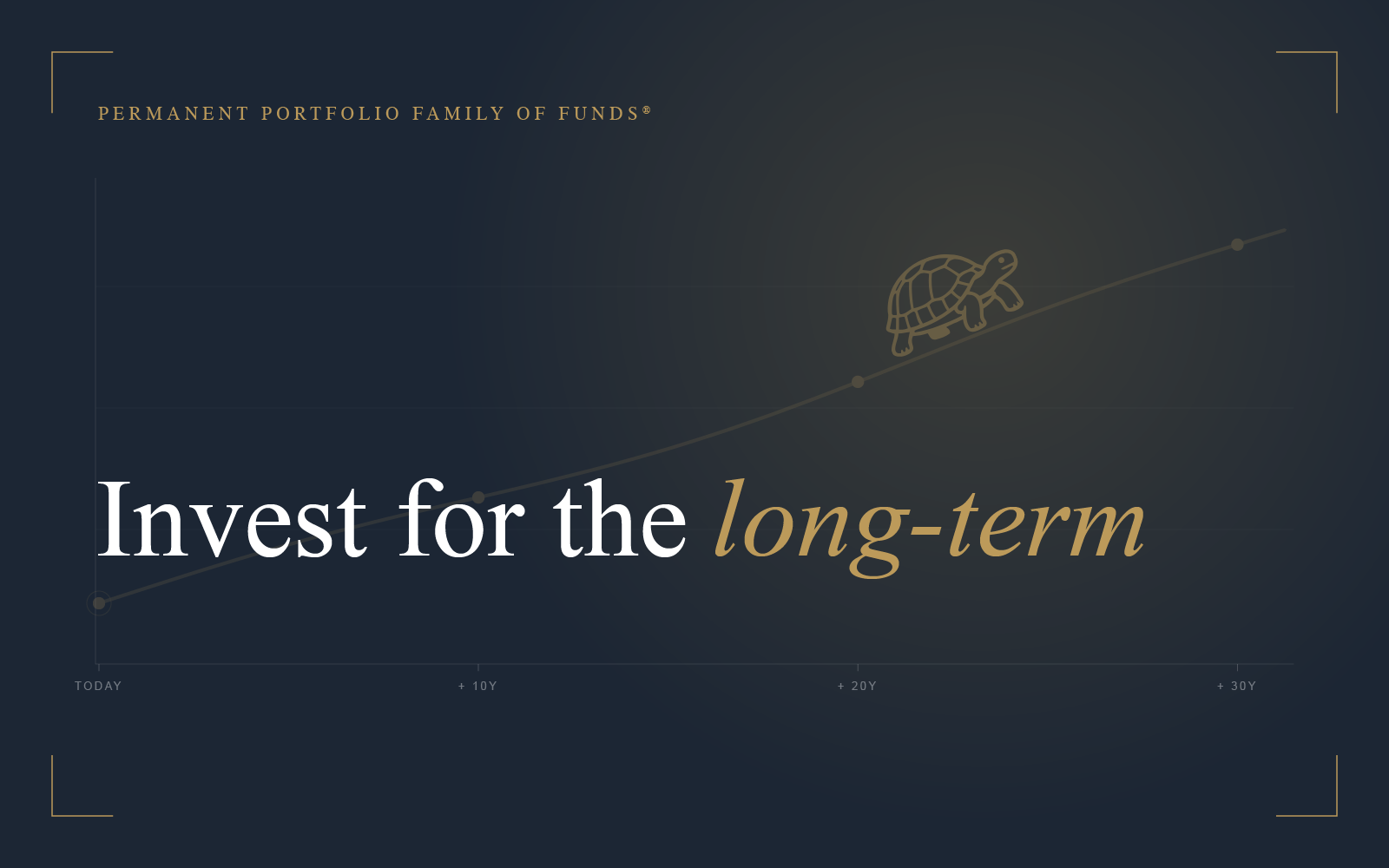
Different Options to Pursue Long-Term Growth Michael J. Cuggino, President and Portfolio Manager of Permanent Portfolio Family of Funds, uses the classic analogy of the tortoise and the hare to describe the different investment objectives and strategies of Permanent Portfolio and Aggressive Growth Portfolio.
Permanent Portfolio is the tortoise, built around an objective of beating inflation over the long term through broad diversification, lower volatility and limited correlation to traditional stock and bond markets.
Aggressive Growth Portfolio is the hare, fully invested in equities and typically holding thirty to fifty companies across approximately a dozen industry groups. Its approach emphasizes growth at a reasonable price and seeks opportunities across industries and market capitalizations, without mirroring the weightings of a particular stock market index.
Because the two portfolios have different investment objectives and strategies, some investors may choose to hold both, using Permanent Portfolio as an absolute return or liquid alternatives allocation, and Aggressive Growth Portfolio for equity exposure.
How to Plan for a Secure Future A long-term investment strategy should reflect an investor’s tolerance for volatility and potential losses, temperament, liquidity needs and time horizon. Once those factors are understood, maintaining discipline and choosing investments that align with those needs can help keep short-term market movements in perspective.
It can also be helpful to think about a portfolio much like a business’s financial statements. The “balance sheet” represents the quality and substance of the assets owned, while the “income statement” represents returns, yields, dividends and rates of return. Focusing exclusively on short-term returns can overlook risks associated with the quality and value of the underlying assets.
Investing Through Market Cycles Markets have moved through the dot-com bust, the 2008 financial crisis, the COVID-19 pandemic, periods of elevated inflation and many other disruptions. A long-term approach recognizes that individual assets can move through cycles lasting years rather than months.
Gold, for example, can experience multi-year cycles lasting five or ten years, or longer. Short-term performance, whether positive or negative, therefore does not necessarily change the long-term role an asset can play within a diversified portfolio.
Headlines can also create pressure to react to short-term developments. Making investment decisions based on such background noise can mean moving out of investments before future gains are realized or becoming too cautious to take advantage of opportunities when markets decline. Maintaining a disciplined, long-term objective can help take some of the emotion and urgency out of those decisions.
Learn more about Permanent Portfolio’s broadly diversified approach or explore Aggressive Growth Portfolio for a fully invested equity strategy focused on long-term growth.
Michael J. Cuggino is President and Portfolio Manager of Permanent Portfolio Family of Funds®. He is a frequent financial media contributor and has been featured on CNBC, Bloomberg TV, Fox Business Network, and MarketWatch, sharing insights on markets, portfolio construction, and long-term investing.